Anna’s Thinking Cap Reading Marathon Goethe's Sorrows of Young Werther
Anna’s Thinking Cap Reading Marathon 100 Days of Charming Rotten Scoundrels

Anna’s Thinking Cap Reading Marathon
100 Days of Charming Rotten Scoundrels
February 20 - May 31, 2024
February 21, 2024
Part 2 of 2
February 21, 2024
Goethe, Sorrows of Young Werther, Book One, May 4, 1771 and May 10, 12, 13
Next passage: February 22, 2024
Goethe, Sorrows of Young Werther, Book One, May 15, 17, 22, 26, 27
And now, let’s examine carefully the three pages I asked you to consider for today!!!
The book starts with an external voice, a bystander, a witness of events, a detached speaker who lacks the tumultuous emotional range of Werther, who hopes we, the readers, may find solace in what we are about to read, and may consider this book our friend at times of need:
“I have diligently collected everything I could discover about the story of poor Werther and set it before you here, knowing that you will thank me for it. You will not be able to withhold your admiration and love for his spirit and character or your tears for his fate.”
Werther is immediately pitied - even before we get a chance to hear his own voice… And we are asked to love his spirit and shed a tear for a character we have not yet encountered…
“And you, good soul, who feel the same urgency as he, take comfort from his sufferings and let this little book be your friend if by fate or your own fault you can find none closer to you.”
Take comfort from his sufferings - and make this book a friend in need… If you feel the same urgency as he… Urgency towards what?! Life?! Love?! Suffering?!
We begin… The novel is what we call an epistolary work - from the Latin word epistle - or letter. Such as the Epistles of Saint Paul!!! Epistolary novels were all the rage in the 18th century, several notable ones preceding Werther, such as Samuel Richardson’s immensely popular Pamela (1740) and Clarissa (1749) - there will be references to them in Pushkin’s Onegin - and Julie, ou la nouvelle Héloïse (1761) by Jean-Jacques Rousseau. The letters, written to a “dearest friend,” are an explosion of emotions and rejoicings by a young man who needed to spend a bit of time sorting out his raging emotions:
May 4, 1771
“How happy I am to be away! Dearest friend, what a thing it is, the human heart! To leave you, whom I love so much, from whom I was inseparable, and yet to be happy!”
The joy of separation from a friend, the joy of new possibilities and beginning, a deeply confessional style of writing, reminiscent more of a diary entry than a letter to a friend…
“Weren't my other attachments especially chosen by fate just to torment a heart like mine? Poor Leonore!
And yet I was innocent. Was it my fault that while her sister's willful charms were keeping me so pleasantly entertained, passion formed in her poor heart? And yet—am I entirely innocent? Didn't I nourish her feelings? Didn't I delight in those genuine expressions of her nature that so often made us laugh, though they were not laughable at all?”
Ah, Werther had to flee after his flirtations with the unnamed sister of Leonore inadvertently ignited feelings in Leonore herself… Yet was he innocent?! Did he nourish this budding feeling in Leonore?! Did he encourage her attachment?! Feelings and attachments are such a complicated thing!!! The mature Goethe will come back to this subject and will expire the complexity of the entanglements of spiritual yearnings and physical attractions in his 1809 novel Elective Affinities.
How often have we said to ourselves: “I will improve, I will not chew over the bit of woe that fate presents us with, the way I have always done; I will enjoy the present and let bygones be bygones.”
What a reasonable course of action!!! What an impossible resolution to make!!!
“Certainly, you're right, dearest friend, there would be less pain among men if-God knows why they're constructed so!—they did not so busily employ their bustling imagination to summon up memories of old woes rather than accept an indifferent present.”
“Bustling imagination” is the QUINTESSENCE of the Romantic literary tradition, that inner wellspring that nourishes our perception of ourselves and those around us!!! Please keep this in mind - we will return to the concept of imagination over and over again in the course of this tutorial!!!
Ah, mixed up feelings and love interest confusion were not the primary reason for Werther’s journey after all!!! He is on an inheritance clarification mission for his mother. Goethe the young lawyer is fully familiar with the nature of such cases!!! Werther meets his charming aunt - and asks his friend to tell his mother that all shall turn out well in her suit against her own sister. How odd!!! To confide love interests to a friend is one thing - but family business?!
“Please be so good as to tell my mother that I am conducting her business as best I can and that I will soon be sending her news. I have spoken to my aunt and have found her not at all the evil woman she was made out to be. She is a lively, excitable person with a heart of gold. I explained my mother's concern about the portion of the inheritance that was withheld; she told me her reasons, the causes, and under what conditions she was prepared to give up all of it, more than we asked for.”
Goethe amends this statement with a prudent conclusion:
“misunderstandings and neglect may cause more confusion in the world than do cunning and malice.”
Too too true…
And now - SOLITARY BROODING!!! Werther seems to be thrilled to be away from EVERYONE - family, friend, love interests…
“Solitude in this paradisiacal place is a precious balm to my heart, and this season of youth, with its abundance, warms my often-shuddering heart. Every tree, every hedge is a bouquet of blossoms and makes you want to turn into a May bug, so as to float in this sea of fragrances and draw all your nourishment from it.”
The celebration of spring rejuvenation is close to Werther’s heart, also experiencing a rebirth in this “paradisiacal” moment in May when all possibilities seem endless…
And now - yet another quintessential point of Romanticism - nature versus culture!!! City life is confining, restraining, unpleasant, corrupting says Goethe, the city child!!! NATURE!!! That’s the place that allows the spirit bound into corruptible matter to experience the joy of unhindered freedom!!! So much more on this subject in Faust!!!
“The town itself is unpleasant; by contrast, it is surrounded by inexpressible natural beauty.”
AND another notion of Romanticism - triumph of the heart over reason!!! Scientific design was the brainchild of the Age of Enlightenment, birthed by the 18th century, steeped in unwavering faith in order and progress. The new emerging culture of sensation and feeling prioritized the inclinations of the heart over the mind. That’s why Werther finds the garden so appealing!!!
“The garden is simple, and immediately on entering you sense that the plan was designed not by a scientific gardener but by a feeling heart that intended to enjoy itself here. I have already shed more than one tear for the deceased in the ruined little arbor that was his favorite spot and now is mine. Soon I will be the master of the garden; I enjoy the gardener's favor even after only these few days, and he will not have done badly as a result.”
May 10
Werther’s spirit is so filled with delight, he cannot capture this blissful moment through the medium of art - which would only serve as a copy of the inimitable sincerity of his emotions!!!
“A wonderful gaiety has seized my entire soul, like the sweet spring mornings I wholeheartedly enjoy. I am alone and glad to be alive in this place, which is made for souls like mine. I am so happy, dearest friend, so deeply immersed in the sense of calm existence that my art is suffering. I could not draw now, not a single stroke, and yet I have never been a greater painter than in these moments.”
The following passage is crucial for our understanding of Werther - and reminds me so much of the contemplation of his place in nature and the great order of being by the young hero of Tolstoy’s novel The Cossacks, Olenin. To understand our place in the continuum of life and our relationship with the creator are essential for our self realization… After all, the Socratic wisdom prompts that an unexamined life is not worth living - but where do we begin this self-examination? Werther starts with his place in the totality of existence:
“I lie in the high grass by the tumbling brook, and closer to the earth a thousand different little shoots grow distinct before my eyes; when closer to my heart I feel the teeming of the little world between the blades of grass, the countless, unfathomable shapes of the tiny worms, the tiny gnats, and feel the presence of the Almighty Who created us in His image, the breath of the All-loving Who in eternal bliss holds us hovering and keeps us; my friend! when the light fades around my eyes and the world around me and the heavens rest in my soul like the shape of a beloved —then I often yearn and think: Oh, could you express that, could you breathe into the paper everything that lives with such warmth and fullness in you that it might become the mirror of your soul, the way your soul is the mirror of unending God.”
May 12
Where does the presence of God extend? Are there other spirits and essences that are present in the world that make an impact on our life? All these ideas will become the foundation of Faust!!!
“I do not know whether deceitful spirits hover around this region or whether it is the warm, divine fantasy in my heart that makes everything around me appear like paradise.”
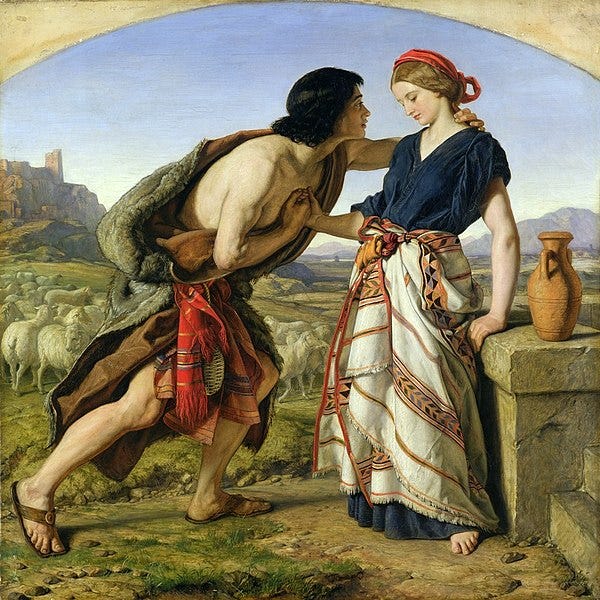
Werther muses on the role of the well and all the classical and biblical encounters by wells and sources of water - think of Jacob and Rachel!!!
“The girls come from the town to fetch water, the most innocent occupation and the most essential, which in olden times the daughters of kings performed. When I sit there, the patriarchal idea comes to life so vividly around me; they are there, all our forebears, meeting others and courting at the well, while benevolent spirits hover over the fountains and the springs.”
The place where physical thirst is quenched is holy - and spiritual thirst may be quenched here as well…
May 13
AND YET ANOTHER quintessential Romanticism theme - books not as a source of knowledge but an extension of the inner world and a construction of a personal identity!!!
“You ask me whether you should send me my books.—My dear, for God's sake, I beg you, keep them away from me!”
Werther wants to have nothing to do with books - he wants to get away from the spell of external influences and stimulations - variations on this theme will be the focus of ALL the books we will read this year!!!
“I no longer want to be influenced, encouraged, inspired: this heart of mine rages enough by itself. I need a lullaby, and I have found that abundantly in my Homer.”
ONLY the great Homeric epics will do - only the purest source of poetry that stands at the inception of culture - instead of serving as a sounding board for all the literary works that came before it… Werther wants to stand at the spring of life and the spring of culture - at the moment of beginning, at the inception of self…
And now – alarm bells!!! The unnamed friend served as a moderating influence on Werther whose emotions could swing wildly from sorrow to ecstasy - and, most importantly, from sweet melancholy to destructive passion:
“My dear, do I need to tell you, you who have so often been burdened with watching me swing from sorrow to ecstasy and from sweet melancholy to destructive passion? And I treat my little heart like a sick child; its every wish is granted. Don't repeat what I say; there are people who would hold it against me.”
What next?! More tomorrow!!!
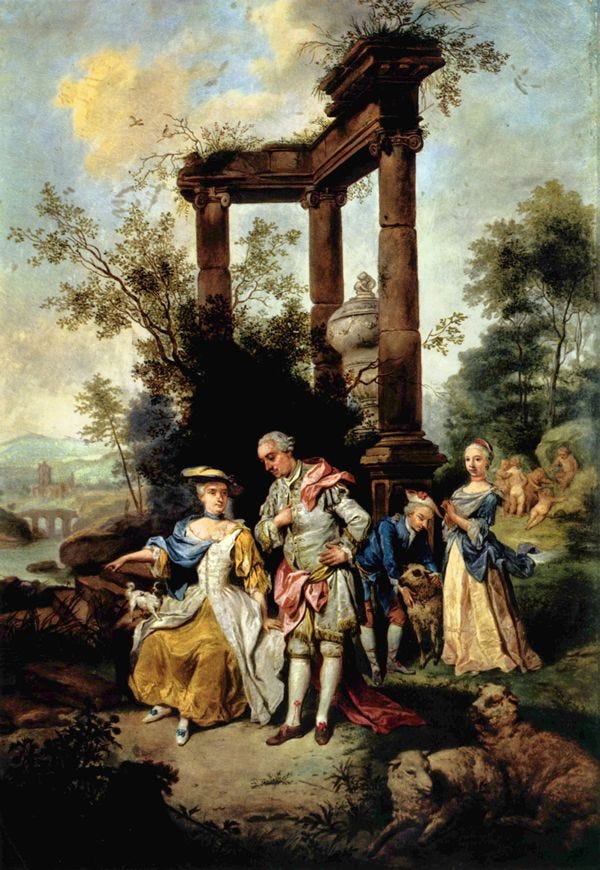
Johann Conrad Seekatz 1719-1768, The Goethe Family, 1762, mother and father, Catharina Elisabeth Goethe and Johann Caspar Goethe, Johann Wolfgang, and his sister Cornelia Friederica. What a fascinating family portrait!!! Not at all formal!!! The beautifully and elegantly attired family is studying nature underneath the ruins of a classical structure - with frolicking lambs aplenty and mischievous cupids in the background!!! And a tiny lapdog seemingly infused with a commanding spirit!!! See my photo with my Yorkie Watson below!!!
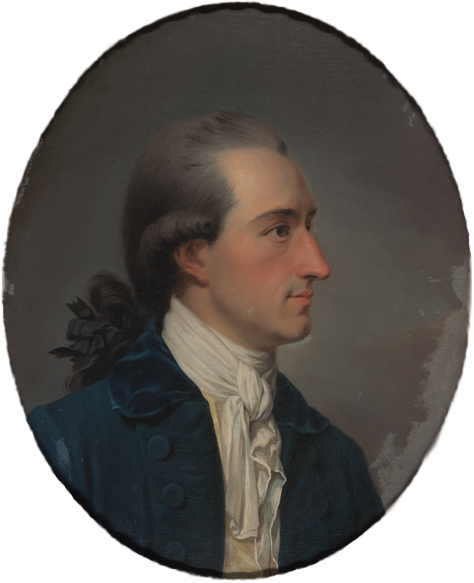
Georg Oswald May, 1738-1816, Johann Wolfgang Goethe in 1779, 5 years after the publication of Werther.
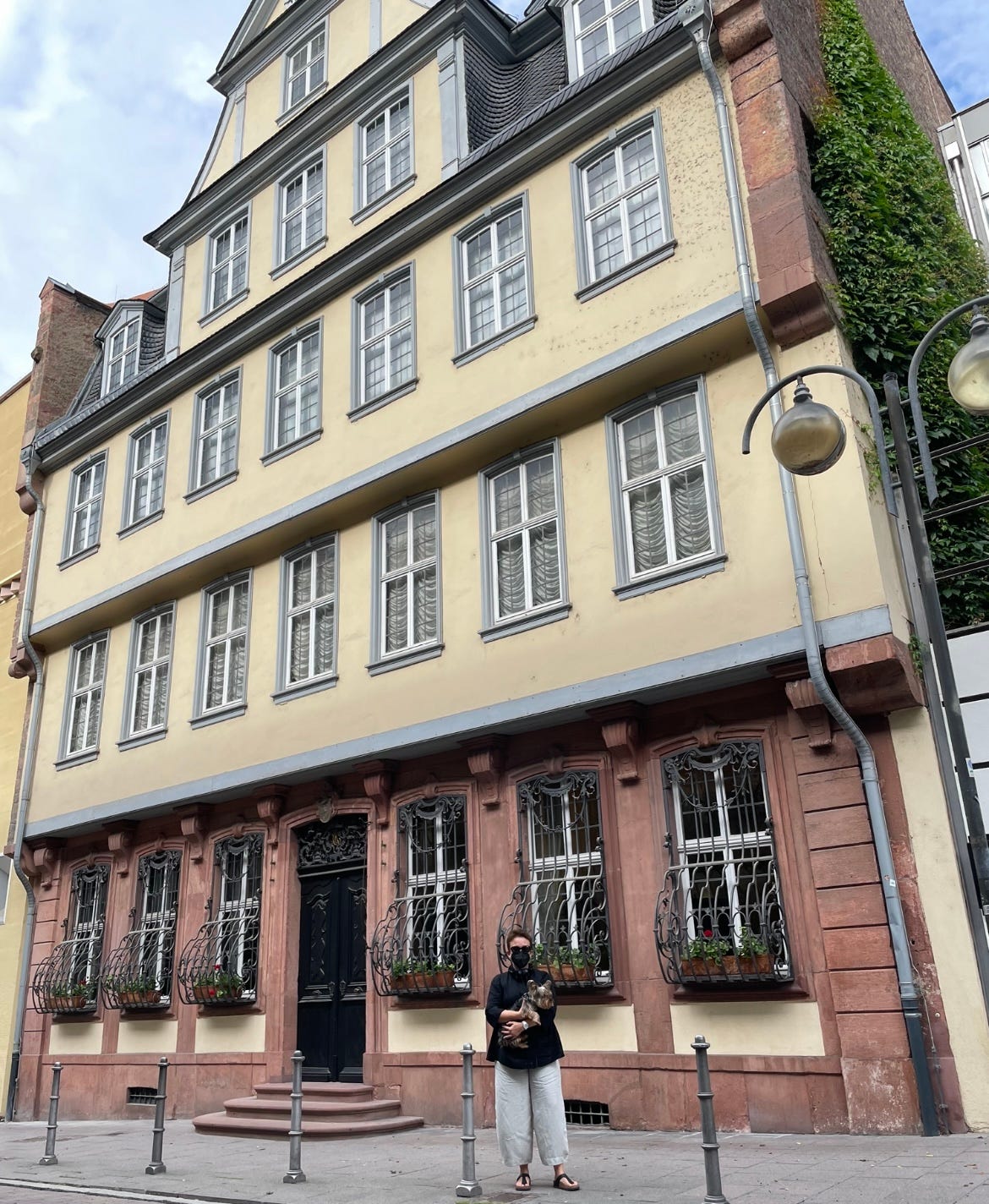
The Goethe family house in Frankfurt, built in 1618 and purchased in 1733 by Grandmother Cornelia Goethe, was the place where Goethe wrote his first play Götz von Berlichingen in 1773, started working on the first drafts of Faust, and completed Werther in February and March, 1774. My COVID era photo by the “Werther” house during a long layover in Frankfurt on my way to Dostoevsky Day celebrations in Saint Petersburg in 2021!!!
William Dyce, 1806-1864, The Meeting of Jacob and Rachel, 1853, Leicester Museum & Art Gallery, England