Federalist 51, 52, 53
100 Days of The Federalist Papers; March 1-May 31, 2026

100 Days of The Federalist Papers
March 1-May 31, 2026
May 7, 2026
Federalist 51, 52, 53
Federalist 54, 55, 56, and 57 tomorrow, hopefully!!!
I am back, finally!!! All Napoleonic events have been completed!!! Now Hamilton!!! Or is it Madison?! Historical record is inconclusive…
Federalist No. 51
The Structure of the Government Must Furnish the Proper Checks and Balances Between the Different Departments From the New York Packet.
Friday, February 8, 1780.
Alexander Hamilton or James Madison
To the People of the State of New York:
“If men were angels, no government would be necessary.” But how to make sure that the government expresses the will of the governed through the consent of the governed?
“It may be a reflection on human nature, that such devices should be necessary to control the abuses of government. But what is government itself, but the greatest of all reflections on human nature? If men were angels, no government would be necessary. If angels were to govern men, neither external nor internal controls on government would be necessary. In framing a government which is to be administered by men over men, the great difficulty lies in this: you must first enable the government to control the governed; and in the next place oblige it to control itself. A dependence on the people is, no doubt, the primary control on the government; but experience has taught mankind the necessity of auxiliary precautions. This policy of supplying, by opposite and rival interests, the defect of better motives, might be traced through the whole system of human affairs, private as well as public.”
How to adequately address the needs of the people in a single republic:
“There are, moreover, two considerations particularly applicable to the federal system of America, which place that system in a very interesting point of view.
First. In a single republic, all the power surrendered by the people is submitted to the administration of a single government; and the usurpations are guarded against by a division of the government into distinct and separate departments. In the compound republic of America, the power surrendered by the people is first divided between two distinct governments, and then the portion allotted to each subdivided among distinct and separate departments. Hence a double security arises to the rights of the people. The different governments will control each other, at the same time that each will be controlled by itself.
Second. It is of great importance in a republic not only to guard the society against the oppression of its rulers, but to guard one part of the society against the injustice of the other part. Different interests necessarıly exist in different classes of citizens. If a majority be united by a common interest, the rights of the minority will be insecure.”
How to protect the weaker parties from being oppressed by the stronger factions:
“It is the end of civil society. It ever has been and ever will be pursued until it be obtained, or until liberty be lost in the pursuit. In a society under the forms of which the stronger faction can readily unite and oppress the weaker, anarchy may as truly be said to reign as in a state of nature, where the weaker individual is not secured against the violence of the stronger; and as, in the latter state, even the stronger individuals are prompted, by the uncertainty of their condition, to submit to a government which may protect the weak as well as themselves; so, in the former state, will the more powerful factions or parties be gradually induced, by a like motive, to wish for a government which will protect all parties, the weaker as well as the more powerful.”
Federalist No. 52
The House of Representatives From the New York Packet.
Friday, February 8, 1788.
Alexander Hamilton or James Madison
To the People of the State of New York:
How to form and administer the House of Representatives:
“From the more general inquiries pursued in the four last papers, I pass on to a more particular examination of the several parts of the government. I shall begin with the House of Representatives.”
“A representative of the United States must be of the age of twenty-five years; must have been seven years a citizen of the United States; must, at the time of his election, be an inhabitant of the State he is to represent; and, during the time of his service, must be in no office under the United States. Under these reasonable limitations, the door of this part of the federal government is open to merit of every description, whether native or adoptive, whether young or old, and without regard to poverty or wealth, or to any particular profession of religious faith.”
How often should elections be held for the members of the House of Representatives:
“The term for which the representatives are to be elected falls under a second view which may be taken of this branch. In order to decide on the propriety of this article, two questions must be considered: first, whether biennial elections will, in this case, be safe; secondly, whether they be necessary or useful.”
Why are frequent and consistent elections necessary:
“First. As it is essential to liberty that the government in general should have a common interest with the people, so it is particularly essential that the branch of it under consideration should have an immediate dependence on, and an intimate sympathy with, the people. Frequent elections are unquestionably the only policy by which this dependence and sympathy can be effectually secured. But what particular degree of frequency may be absolutely necessary for the purpose, does not appear to be susceptible of any precise calculation, and must depend on a variety of circumstances with which it may be connected. Let us consult experience, the guide that ought always to be followed whenever it can be found.”
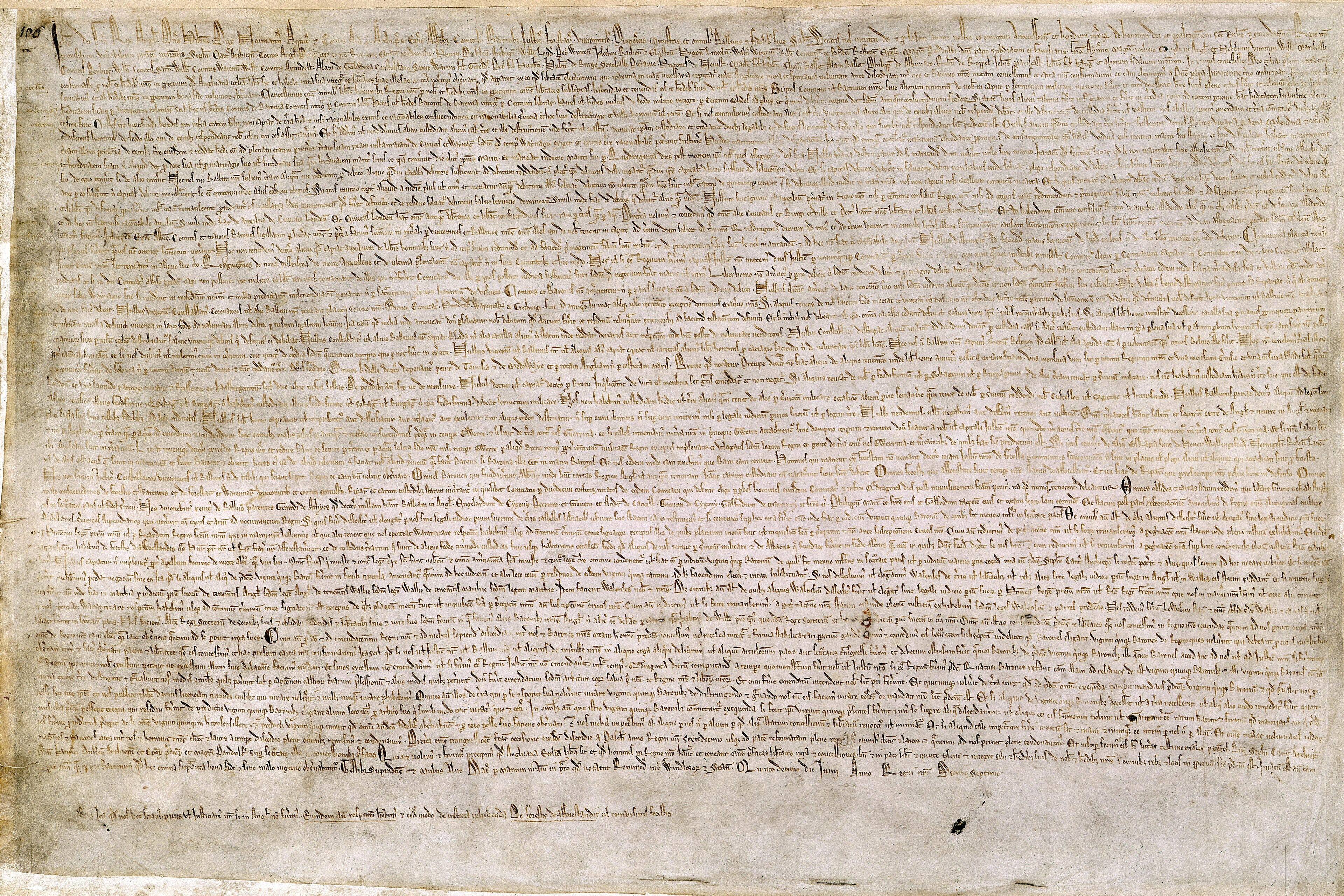
Once again, the British example for the establishment of elections. For more information on the influence of the Magna Carta, the Glorious Revolution, and the British Bill of Rights on the American Revolution, see my 2026 Age of Revolution columns:
“The first to which this character ought to be applied, is the House of Commons in Great Britain. The history of this branch of the English Constitution, anterior to the date of Magna Charta, is too obscure to yield instruction. The very existence of it has been made a question among political antiquaries. The earliest records of subsequent date prove that parliaments were to SIT only every year; not that they were to be elected every year. And even these annual sessions were left so much at the discretion of the monarch, that, under various pretexts, very long and dangerous intermissions were often contrived by royal ambition. To remedy this grievance, it was provided by a statute in the reign of Charles II, that the intermissions should not be protracted beyond a period of three years. On the accession of William III, when a revolution took place in the government, the subject was still more seriously resumed, and it was declared to be among the fundamental rights of the people that parliaments ought to be held frequently.” By another statute, which passed a few years later in the same reign, the term “frequently,” which had alluded to the triennial period settled in the time of Charles II, is reduced to a precise meaning, it being expressly enacted that a new parliament shall be called within three years after the termination of the former. The last change, from three to seven years, is well known to have been introduced pretty early in the present century, under on alarm for the Hanoverian succession. From these facts it appears that the greatest frequency of elections which has been deemed necessary in that kingdom, for binding the representatives to their constituents, does not exceed a triennial return of them. And if we may argue from the degree of liberty retained even under septennial elections, and all the other vicious ingredients in the parliamentary constitution, we cannot doubt that a reduction of the period from seven to three years, with the other necessary reforms, would so far extend the influence of the people over their representatives as to satisfy us that biennial elections, under the federal system, cannot possibly be dangerous to the requisite dependence of the House of Representatives on their constituents.”
Federalist No. 53
The Same Subject Continued: The House of Representatives From the New York Packet.
Tuesday, February 12, 1788.
Alexander Hamilton or James Madison
To the People of the State of New York:
Wisdom for all ages:
“I shall here, perhaps, be reminded of a current observation, “that where annual elections end, tyranny begins.””
On the benefit of biennial elections:
“The second question stated is, whether biennial elections be necessary or useful. The propriety of answering this question in the affirmative will appear from several very obvious considerations. No man can be a competent legislator who does not add to an upright intention and a sound judgment a certain degree of knowledge of the subjects on which he is to legislate. A part of this knowledge may be acquired by means of information which lie within the compass of men in private as well as public stations. Another part can only be attained, or at least thoroughly attained, by actual experience in the station which requires the use of it. The period of service, ought, therefore, in all such cases, to bear some proportion to the extent of practical knowledge requisite to the due performance of the service. The period of legislative service established in most of the States for the more numerous branch is, as we have seen, one year. The question then may be put into this simple form: does the period of two years bear no greater proportion to the knowledge requisite for federal legislation than one year does to the knowledge requisite for State legislation? The very statement of the question, in this form, suggests the answer that ought to be given to it.”
The Magna Carta, or the Great Charter, was a 1215 document concluded between King John of England (1166-1216) and the barons which offered protection from illegal imprisonment and guaranteed access to a justice system which safeguarded individual rights. Handwritten on parchment in Latin, it limited the king’s power and stipulated that each member of a jurisdiction is subject to the same law - which was a revolutionary concept at the time.